
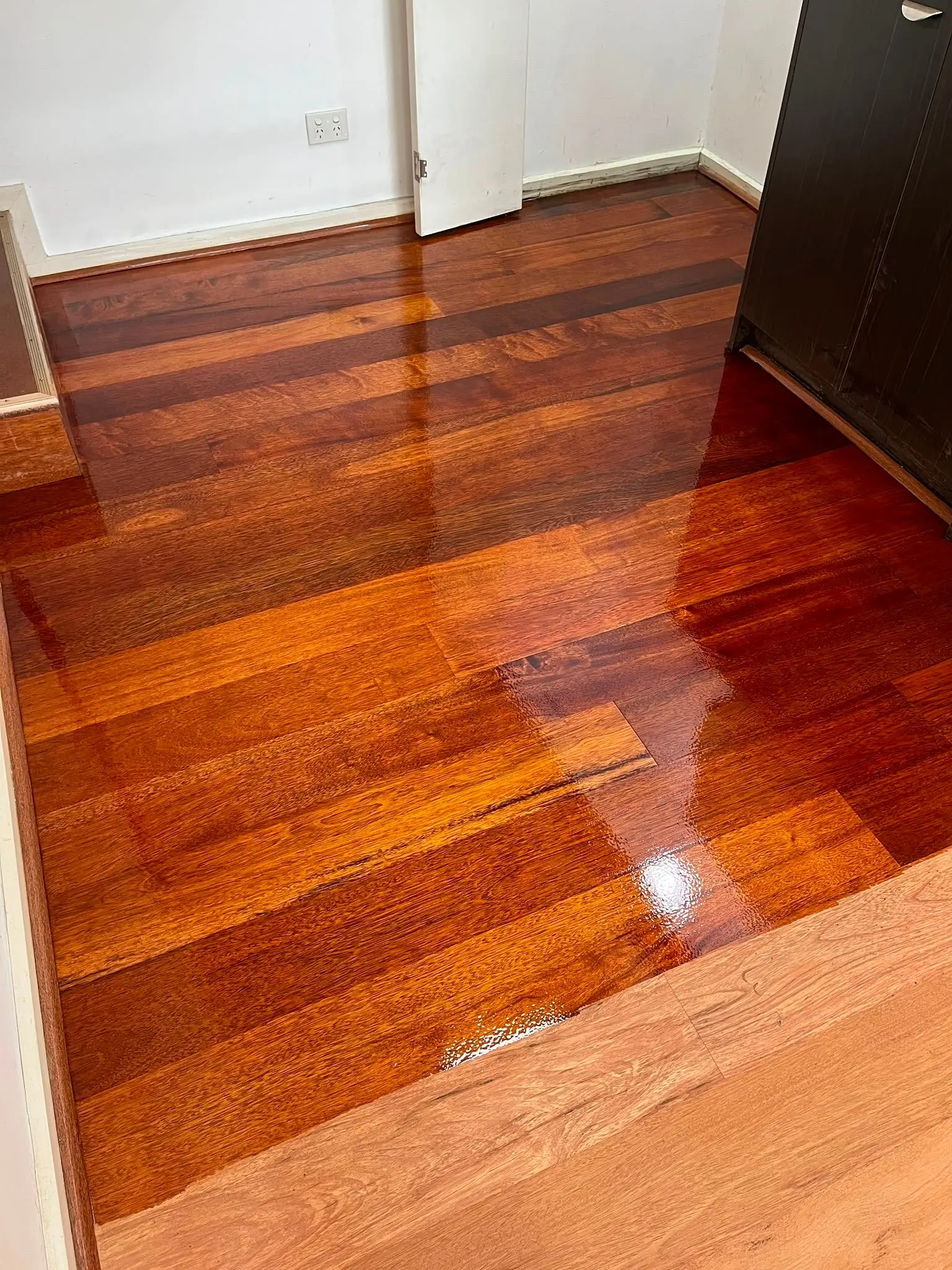
After sanding, the finish is what you actually see and walk on every day. The two main choices are oil-based and water-based coatings. Both protect your floor well; they just look and behave differently.
How they look
Oil-based finishes give timber a warm, amber tone that deepens over time. They suit older homes, darker hardwoods such as jarrah, and anyone who loves a rich, traditional look.
Water-based finishes dry clear and keep the timber close to its natural colour. Light timbers like Tasmanian oak and blackbutt stay light, which suits modern, Scandinavian-style interiors.
Durability
Both types are hard-wearing when applied properly. Oil-based finishes are known for a tough surface, while modern water-based finishes are also very durable and keep their clarity. As a rough guide, oil-based finishes last around 7–10 years and water-based around 5–10 years before they need attention, depending on foot traffic and care.
Smell and drying time
| Oil-based | Water-based | |
|---|---|---|
| Colour | Warm amber | Clear, natural |
| Odour | Strong while drying | Low |
| Drying between coats | Longer | Faster |
| Good for | Traditional homes, dark timbers | Modern homes, light timbers, quick turnaround |
If you need to stay in the house during the job, or you are sensitive to smells, a water-based finish is usually the easier choice.
Matte, satin or gloss?
Both types come in different sheen levels. Satin is the most popular: it looks elegant and hides small marks and dust. Matte gives a natural, raw-timber look. Gloss looks striking and shows off the grain, but also shows scratches more.
Not sure? Ask us
The right finish depends on your timber, your home and how you live. We are happy to show you samples and talk it through when we quote. Request a free quote or call us.