
Frequently asked questions
Everything you need to know before your floor is sanded and polished.
Pricing & quotes
How much does floor sanding cost?
We price by the square metre. The final price depends on the size of the area, the condition of the boards, any repairs, stairs, and the finish you choose. We give you a clear, fixed quote before any work starts. Request a free quote.
Are quotes free?
Yes. Send us a few photos and the approximate size of the area, and we can usually give you an estimate straight away. If needed, we come out to inspect the floor and confirm the price, at no cost.
Which areas of Melbourne do you service?
All of Melbourne, from the CBD to the outer suburbs: north, south, east and west. We are based in Notting Hill, in the south-east. See areas we service, or ask us if you are not sure.
The job
Will there be a lot of dust during sanding?
Sanding naturally creates dust, but we use dust-control equipment and prepare your home before work begins. We clean the work area thoroughly when we finish. A small amount of dust may remain in hard-to-reach places such as corners, edges or ceiling surfaces.
Do I need to move all my furniture before the job?
Yes, the rooms need to be completely empty so we can sand and finish evenly. If you haven't had a chance to clear everything, our team can help move items on the day. Just let us know beforehand so we can allow extra time.
How long does the job take?
It depends on the size of the area, repairs and the finish. Each coat needs time to dry before the next one. We give you a timeline with your quote, so you can plan around it.
Can you sand engineered timber floors?
Often, yes. Engineered boards have a top layer of real timber, and many can be sanded at least once. It depends on how thick that layer is. Send us a photo of the board edge, or we can check on site.
After the job
How soon can I walk on the floor after the finish is applied?
You can walk on the floor in socks after 24 hours. Wait 7 days before moving furniture back, and at least 2 weeks for heavy items such as sofas, fridges or beds. Times vary with the finish and the timber.
How long will the new finish last?
It depends on use and care. As a guide, oil-based finishes last around 7–10 years and water-based finishes around 5–10 years. High-traffic areas such as hallways and kitchens may need attention after 3–5 years, while bedrooms can last 15+ years. These are averages, not guarantees.
How do I look after my floor?
Sweep or vacuum with a soft head, and clean with a damp (not wet) mop and a pH-neutral floor cleaner. Put felt pads under furniture legs, use mats at entrances, and wipe up spills quickly.
Finishes & timber
Should I choose matte, satin or gloss?
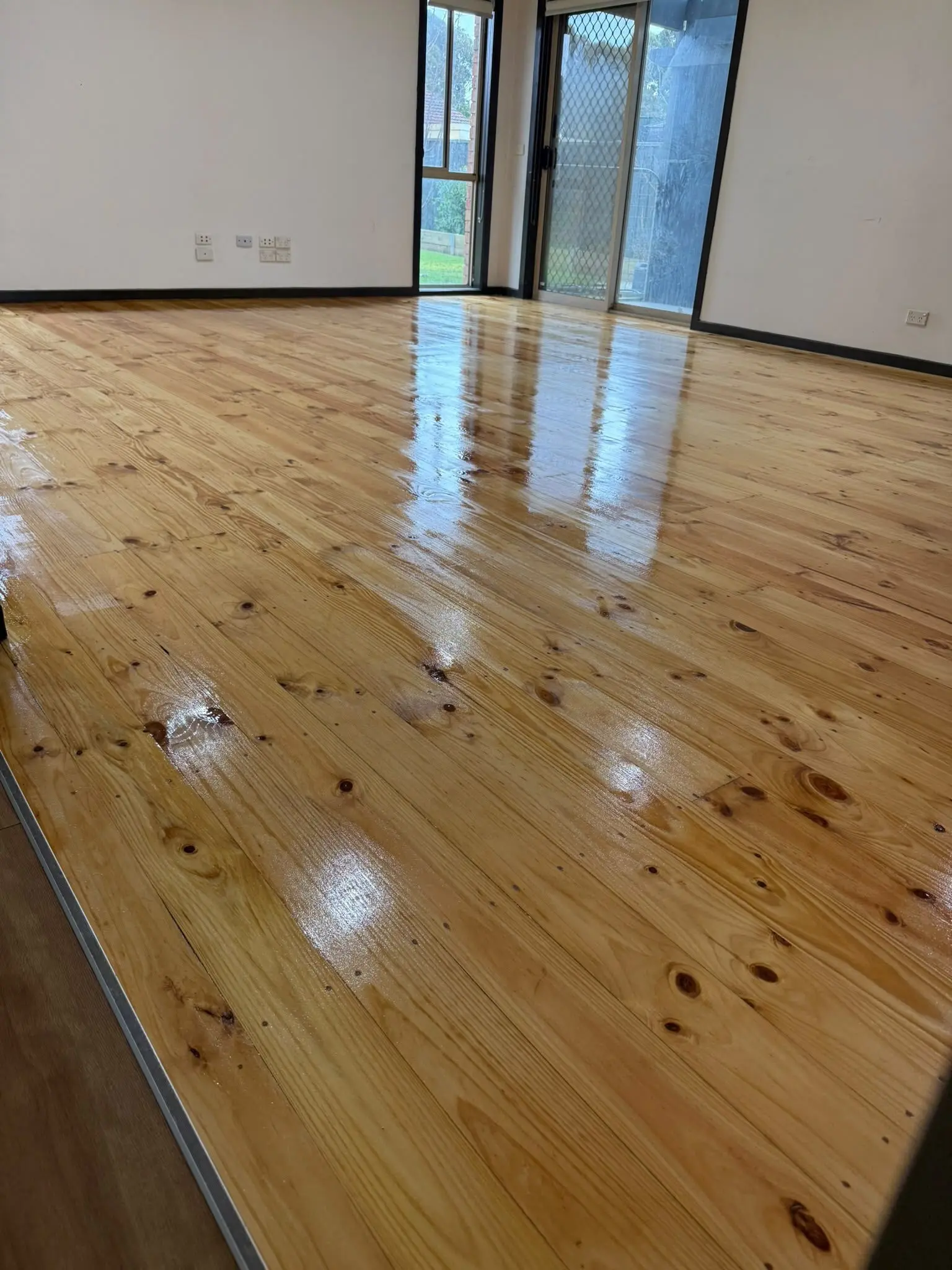
Satin is the most popular: it balances elegance and durability, and hides small marks well. Matte gives a natural, raw-timber look. Gloss is shiny and shows the grain strongly, but also shows scratches and dust more.
What is the difference between water-based and oil-based finishes?
Water-based finishes dry clear, have low odour and dry quickly. Oil-based finishes give timber a warmer amber colour and a tough surface, but have a stronger smell and take longer to dry. Read more in oil vs water-based finishes.
Can you change the colour of my floor?
Yes. After sanding we can stain the timber, from light natural tones to deep black, and then coat it. We test the stain on a small area first so you can see the colour on your own boards.
Still have a question?
Call or send us a message. We're happy to help, even if you're not ready to book.